
When Should You Stop Fighting With Your Aging Parent?
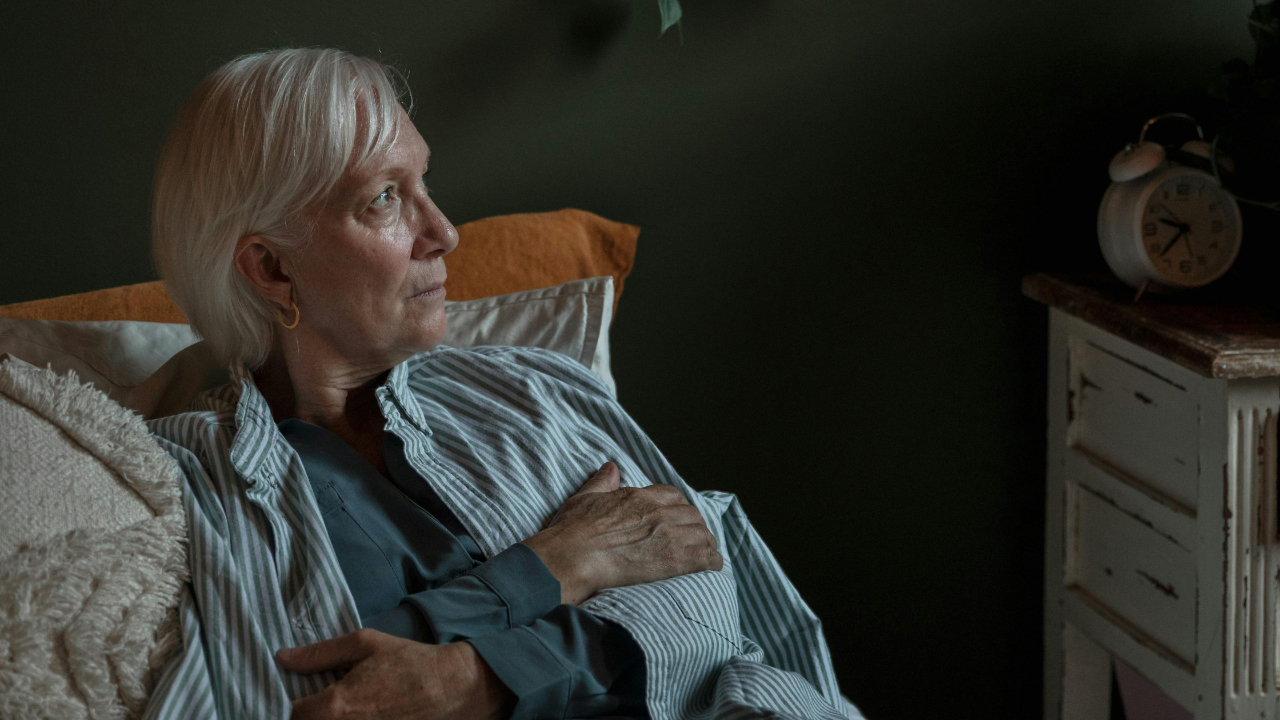
Many adult children spend years trying to get their aging parent to make better choices.
They encourage healthier eating.
They remind them to exercise.
They worry about smoking.
They worry about drinking.
They push medication compliance.
They try to improve safety.
And while these efforts often come from a place of love, there is a question that few people stop to ask:
Who are you doing it for?
That may sound harsh, but stay with me.
Because the answer is not always as obvious as it seems.
The Reality Most Adult Children Avoid
If your parent is in their nineties, they have already exceeded average life expectancy by many years.
For perspective, the average life expectancy in the United States is approximately 74 years for men and 80 years for women.
If your father is 95 years old or your mother is 92 years old, we are no longer talking about someone in midlife. We are talking about someone who has already lived a long life.
That does not make their life any less valuable.
It absolutely does not.
But it may require us to start asking different questions.
Instead of focusing only on extending life, we may need to consider what kind of life remains.
The Trap of "Shoulding"
One of the concepts I teach adult children is what I call "shoulding."
Shoulding is when we argue with reality by insisting things should be different than they actually are.
Your parent should eat healthier.
Your parent should exercise more.
Your parent should stop smoking.
Your parent should listen to their doctor.
Your parent should change.
The problem is that reality does not change simply because we think it should.
The more attached we become to how things should be, the more emotional suffering we often create for ourselves.
This does not mean we stop caring.
It means we begin seeing reality clearly instead of fighting it.
The Story of My Dad and the Bottle of Vodka
During the COVID pandemic, my father was living in a board-and-care home.
Families were not allowed inside, so residents and families had to find creative ways to stay connected.
One day, the families organized a drive-by parade. I videoed it.
Cars lined up outside.
People waved.
Signs were held up.
Horns were honked.
My dad sat outside in his wheelchair, smiling and thanking everyone.
What made it especially sweet was that he thought all those people had come specifically to see him.
They hadn't.
They were the families of all the residents.
But he was delighted nonetheless.
What most people watching the video didn't know was that sitting on his lap was a bottle of vodka.
My father was around 95 or 96 years old at the time.
He liked a martini every evening.
Because of COVID restrictions, I left the bottle outside for staff to bring to him.
Some people might hear that story and immediately think I should not have done that.
Maybe.
But I had a different question.
What was my goal?
Was I trying to squeeze out a little more quantity of life?
Or was I trying to preserve the quality of the life he still had?
Those are not always the same thing.
Sometimes We Are Trying to Reduce Our Own Anxiety
Most adult children believe they are pushing their parent because they want what is best for them.
Sometimes that is true.
But sometimes there is something else happening underneath the surface.
Sometimes we are trying to reduce our own anxiety.
Our own fear.
Our own guilt.
Our own discomfort with watching decline.
Our own sense of obligation.
That leads to another important question:
Obligation to what?
Obligation to who?
Most people have never examined it.
They simply feel it.
A good daughter should...
A good son should...
A good caregiver should...
According to who?
Your neighbors?
Your coworkers?
Your siblings?
People on social media?
People whose opinions have no real impact on your life?
Why are their opinions carrying more weight than the wishes of the person actually living the final chapter of their life?
The Lost Connection
This is where many adult children get stuck.
They spend years arguing with their parent about food, cigarettes, exercise, medications, or other lifestyle choices.
Then one day, their parent dies.
And suddenly the cigarettes were not the problem.
The lost connection was.
The missed opportunities were.
The tension was.
The constant battle was.
Your parent is not a project to manage.
They are a person.
A person with preferences.
A person with autonomy.
A person with the right to make choices you do not agree with.
Even choices you would not make yourself.
A Different Question to Ask Yourself
Instead of asking:
"How do I get my parent to change?"
Try asking:
"Is this battle worth the cost?"
Sometimes the answer will be yes.
Safety matters.
Medical decisions matter.
There are absolutely situations where intervention is necessary.
But there are also situations where the emotional cost of the battle exceeds the benefit.
The challenge is learning the difference.
Because sometimes, especially in very advanced age, there is more love in acceptance than there is in control.
And sometimes the greatest gift we can give our aging parent is not another argument.
It is our presence.
It is our connection.
It is our willingness to honor the life they have left, even when we wish some of their choices were different.
The question is not whether your parent will live forever.
They won't.
None of us will.
The question is how you want to spend the time that remains.
Fighting reality?
Or making the most of the moments you still have together?
Get your FREE Emotional Relief Guide for Adult Children of Aging Parents!
Author

Sofia Amirpoor
Geriatric Social Worker
Sofia Amirpoor, MSW is a geriatric social worker with over 30 years of experience helping families navigate the challenges of aging parent care. Through her writing, videos, and programs, she helps adult children support their aging parents with greater understanding, emotional resilience, and confidence.